What is the maximum number of departments under the executive branch according to Article IV
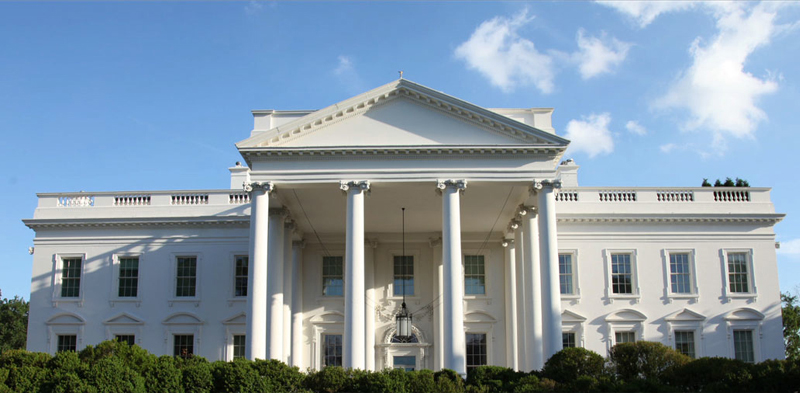
From the President, to the Vice President, to the Chiffonier, learn more most the Executive Branch of the government of the United States.
The ability of the Executive Branch is vested in the President of the United States, who also acts as head of state and Commander-in-Chief of the armed forces. The President is responsible for implementing and enforcing the laws written by Congress and, to that stop, appoints the heads of the federal agencies, including the Cabinet. The Vice President is also part of the Executive Co-operative, fix to assume the Presidency should the demand arise.
The Chiffonier and independent federal agencies are responsible for the day-to-day enforcement and administration of federal laws. These departments and agencies have missions and responsibilities as widely divergent as those of the Department of Defense and the Ecology Protection Bureau, the Social Security Assistants and the Securities and Exchange Committee.
Including members of the armed forces, the Executive Branch employs more than than 4 meg Americans.
The President | The Vice President
Executive Part of the President | The Cabinet
The President
The President is both the head of country and head of government of the United states of America, and Commander-in-Chief of the military machine.
Nether Article Two of the Constitution, the President is responsible for the execution and enforcement of the laws created by Congress. Fifteen executive departments — each led by an appointed fellow member of the President'due south Cabinet — deport out the day-to-day administration of the federal authorities. They are joined in this by other executive agencies such as the CIA and Environmental Protection Agency, the heads of which are not part of the Cabinet, but who are nether the total authority of the President. The President also appoints the heads of more than 50 independent federal commissions, such as the Federal Reserve Lath or the Securities and Exchange Commission, likewise as federal judges, ambassadors, and other federal offices. The Executive Role of the President (EOP) consists of the immediate staff to the President, along with entities such as the Office of Management and Upkeep and the Office of the United states of america Merchandise Representative.
The President has the ability either to sign legislation into constabulary or to veto bills enacted past Congress, although Congress may override a veto with a two-thirds vote of both houses. The Executive Co-operative conducts diplomacy with other nations, and the President has the power to negotiate and sign treaties, which likewise must be ratified by two-thirds of the Senate. The President can issue executive orders, which direct executive officers or clarify and farther existing laws. The President also has unlimited power to extend pardons and clemencies for federal crimes, except in cases of impeachment.
With these powers come up several responsibilities, among them a constitutional requirement to "from time to time requite to the Congress Data of the Land of the Union, and recommend to their Consideration such Measures as he shall guess necessary and expedient." Although the President may fulfill this requirement in any way he or she chooses, Presidents take traditionally given a Land of the Wedlock address to a joint session of Congress each Jan (except in inaugural years) outlining their agenda for the coming year.
The Constitution lists merely three qualifications for the Presidency — the President must exist 35 years of historic period, be a natural born denizen, and must have lived in the Us for at least 14 years. And though millions of Americans vote in a presidential election every four years, the President is not, in fact, straight elected by the people. Instead, on the first Tuesday in November of every fourth year, the people elect the members of the Balloter College. Apportioned by population to the 50 states — 1 for each fellow member of their congressional delegation (with the Commune of Columbia receiving 3 votes) — these Electors and then cast the votes for President. In that location are currently 538 electors in the Electoral College.
President Barack Obama is the 44th President of the United States. He is, however, only the 43rd person ever to serve as President; President Grover Cleveland served two nonconsecutive terms, and thus is recognized as both the 22nd and the 24th President. Today, the President is limited to two 4-year terms, but until the 22nd Subpoena to the Constitution, ratified in 1951, a President could serve an unlimited number of terms. Franklin Delano Roosevelt was elected President four times, serving from 1932 until his death in 1945; he is the only President ever to have served more two terms.
By tradition, the President and the Starting time Family live in the White House in Washington, D.C., as well the location of the President's Oval Part and the offices of the his senior staff. When the President travels by plane, his shipping is designated Air Force One; he may also utilise a Marine Corps helicopter, known as Marine I while the President is on lath. For ground travel, the President uses an armored Presidential limousine.
The Vice President
The primary responsibility of the Vice President of the United States is to be ready at a moment'south detect to assume the Presidency if the President is unable to perform his duties. This can be because of the President'southward decease, resignation, or temporary incapacitation, or if the Vice President and a bulk of the Cabinet gauge that the President is no longer able to discharge the duties of the presidency.
The Vice President is elected along with the President past the Electoral College — each elector casts one vote for President and another for Vice President. Before the ratification of the 12th Amendment in 1804, electors merely voted for President, and the person who received the second greatest number of votes became Vice President.
The Vice President as well serves every bit the President of the Usa Senate, where he or she casts the deciding vote in the case of a tie. Except in the example of tiebreaking votes, the Vice President rarely really presides over the Senate. Instead, the Senate selects one of their own members, usually junior members of the majority party, to preside over the Senate each solar day.
Joseph R. Biden is the 47th Vice President of the United States. Of the 45 previous Vice Presidents, nine have succeeded to the Presidency, and four have been elected to the Presidency in their own right. The duties of the Vice President, outside of those enumerated in the Constitution, are at the discretion of the current President. Each Vice President approaches the function differently — some take on a specific policy portfolio, others serve but as a acme adviser to the President.
The Vice President has an office in the Due west Wing of the White Firm, likewise as in the nearby Eisenhower Executive Office Building. Like the President, he too maintains an official residence, at the Usa Naval Observatory in Northwest Washington, D.C. This peaceful mansion, has been the official dwelling of the Vice President since 1974 — previously, Vice Presidents had lived in their own private residences. The Vice President also has his own limousine, operated by the United States Secret Service, and flies on the same aircraft the President uses — but when the Vice President is aboard, the craft are referred to equally Air Force Ii and Marine Two.
Executive Office of the President
Every day, the President of the United States is faced with scores of decisions, each with of import consequences for America'south future. To provide the President with the support that he or she needs to govern finer, the Executive Office of the President (EOP) was created in 1939 by President Franklin D. Roosevelt. The EOP has responsibility for tasks ranging from communicating the President's bulletin to the American people to promoting our trade interests abroad.
The EOP, overseen past the White House Chief of Staff, has traditionally been home to many of the President's closest advisers. While Senate confirmation is required for some directorate, such as the Director of the Office of Direction and Budget, most are appointed with full Presidential discretion. The individual offices that these advisors oversee have grown in size and number since the EOP was created. Some were formed by Congress, others as the President has needed them — they are constantly shifting equally each President identifies his needs and priorities, with the current EOP employing over 1,800 people.
Perhaps the most visible parts of the EOP are the White House Communications Office and Printing Secretarial assistant'due south Part. The Press Secretarial assistant provides daily briefings for the media on the President's activities and agenda. Less visible to most Americans is the National Security Council, which advises the President on strange policy, intelligence, and national security.
There are also a number of offices responsible for the practicalities of maintaining the White House and providing logistical support for the President. These include the White House Armed services Role, which is responsible for services ranging from Air Strength 1 to the dining facilities, and the Role of Presidential Accelerate, which prepares sites remote from the White Firm for the President'due south arrival.
Many senior advisors in the EOP work near the President in the West Wing of the White House. Still, the majority of the staff is housed in the Eisenhower Executive Office Building, but a few steps away and part of the White House chemical compound.
The Cabinet
The Cabinet is an advisory body made up of the heads of the 15 executive departments. Appointed by the President and confirmed past the Senate, the members of the Cabinet are frequently the President'due south closest confidants. In add-on to running major federal agencies, they play an important function in the Presidential line of succession — after the Vice President, Speaker of the House, and Senate President pro tempore, the line of succession continues with the Cabinet offices in the order in which the departments were created. All the members of the Cabinet take the title Secretarial assistant, excepting the head of the Justice Section, who is styled Attorney Full general.
Section of Agriculture
The U.South. Department of Agriculture (USDA) develops and executes policy on farming, agriculture, and food. Its aims include meeting the needs of farmers and ranchers, promoting agronomical trade and product, assuring nutrient safety, protecting natural resources, fostering rural communities, and ending hunger in America and abroad.
The USDA employs more than 100,000 employees and has an almanac budget of approximately $95 billion. It consists of 17 agencies, including the Animal and Plant Health Inspection Service, the Food and Nutrition Service, and the Forest Service. The bulk of the section'due south budget goes towards mandatory programs that provide services required by law, such every bit programs designed to provide nutrition assistance, promote agricultural exports, and conserve our environs. The USDA as well plays an of import function in overseas aid programs past providing surplus foods to developing countries.
The United states Secretarial assistant of Agriculture administers the USDA.
Department of Commerce
The Department of Commerce is the government agency tasked with improving living standards for all Americans by promoting economic development and technological innovation.
The department supports U.S. business organisation and industry through a number of services, including gathering economic and demographic information, issuing patents and trademarks, improving understanding of the environment and oceanic life, and ensuring the effective use of scientific and technical resource. The agency also formulates telecommunication and technology policy, and promotes U.Southward. exports by assisting and enforcing international trade agreements.
The Secretary of Commerce oversees a $6.five billion budget and approximately 38,000 employees.
Department of Defence force
The mission of the Section of Defense (DOD) is to provide the military forces needed to deter state of war and to protect the security of our country. The department's headquarters is at the Pentagon.
The DOD consists of the Departments of the Army, Navy, and Air Forcefulness, besides as many agencies, offices, and commands, including the Joint Chiefs of Staff, the Pentagon Forcefulness Protection Bureau, the National Security Bureau, and the Defense Intelligence Bureau. The DOD occupies the vast majority of the Pentagon building in Arlington, VA.
The Department of Defense is the largest government bureau, with more than 1.3 one thousand thousand men and women on active duty, well-nigh 700,000 civilian personnel, and 1.1 1000000 citizens who serve in the National Guard and Reserve forces. Together, the armed services and civilian arms of DOD protect national interests through war-fighting, providing humanitarian aid, and performing peacekeeping and disaster relief services.
Section of Instruction
The mission of the Department of Education is to promote pupil achievement and training for competition in a global economy by fostering educational excellence and ensuring equal access to educational opportunity.
The Section administers federal financial help for instruction, collects data on America's schools to guide improvements in education quality, and works to complement the efforts of state and local governments, parents, and students.
The U.S. Secretary of Didactics oversees the Department'due south 4,200 employees and $68.6 billion budget.
Department of Energy
The mission of the Department of Free energy (DOE) is to advance the national, economic, and free energy security of the United States.
The DOE promotes America'southward free energy security past encouraging the development of reliable, make clean, and affordable energy. It administers federal funding for scientific research to further the goal of discovery and innovation — ensuring American economic competitiveness and improving the quality of life for Americans.
The DOE is also tasked with ensuring America's nuclear security, and with protecting the environment by providing a responsible resolution to the legacy of nuclear weapons production.
The United states Secretary of Energy oversees a upkeep of approximately $23 billion and more than 100,000 federal and contract employees.
Department of Health and Human Services
The Section of Health and Human Services (HHS) is the U.s. government'south principal agency for protecting the wellness of all Americans and providing essential human services, especially for those who are to the lowest degree able to assistance themselves. Agencies of HHS comport health and social scientific discipline inquiry, piece of work to prevent affliction outbreaks, assure food and drug condom, and provide health insurance.
In addition to administering Medicare and Medicaid, which together provide health insurance to ane in four Americans, HHS also oversees the National Institutes of Health, the Food and Drug Assistants, and the Centers for Disease Control.
The Secretary of Health and Man Services oversees a budget of approximately $700 billion and approximately 65,000 employees. The Department's programs are administered by xi operating divisions, including eight agencies in the U.S. Public Health Service and 3 homo services agencies.
Department of Homeland Security
The missions of the Department of Homeland Security are to foreclose and disrupt terrorist attacks; protect the American people, our critical infrastructure, and primal resource; and respond to and recover from incidents that exercise occur. The third largest Cabinet department, DHS was established by the Homeland Security Act of 2002, largely in response to the terrorist attacks on September 11, 2001. The new section consolidated 22 executive branch agencies, including the U.S. Community Service, the U.Due south. Coast Guard, the U.S. Secret Service, the Transportation Security Assistants, and the Federal Emergency Management Bureau.
DHS employs 216,000 people in its mission to patrol borders, protect travelers and our transportation infrastructure, enforce immigration laws, and respond to disasters and emergencies. The bureau also promotes preparedness and emergency prevention amid citizens. Policy is coordinated past the Homeland Security Quango at the White Business firm, in cooperation with other defence force and intelligence agencies, and led by the Banana to the President for Homeland Security.
Department of Housing and Urban Development
The Department of Housing and Urban Evolution (HUD) is the federal agency responsible for national policies and programs that accost America's housing needs, that ameliorate and develop the nation's communities, and that enforce fair housing laws. The Department plays a major role in supporting homeownership for lower- and moderate-income families through its mortgage insurance and rent subsidy programs.
Offices within HUD include the Federal Housing Administration, which provides mortgage and loan insurance; the Office of Fair Housing and Equal Opportunity, which ensures all Americans equal access to the housing of their selection; and the Community Development Cake Grant Program, which helps communities with economic evolution, job opportunities, and housing rehabilitation. HUD also administers public housing and homeless assistance.
The Secretary of Housing and Urban Evolution oversees approximately ix,000 employees on a budget of approximately $40 billion.
Department of the Interior
The Department of the Interior (DOI) is the nation's principal conservation agency. Its mission is to protect America's natural resource, offering recreation opportunities, comport scientific research, conserve and protect fish and wildlife, and honor our trust responsibilities to American Indians, Alaskan Natives, and our responsibilities to island communities.
DOI manages 500 meg acres of surface state, or about one-5th of the land in the United States, and manages hundreds of dams and reservoirs. Agencies within the DOI include the Agency of Indian Affairs, the Minerals Management Service, and the U.S. Geological Survey. The DOI manages the national parks and is tasked with protecting endangered species.
The Secretary of the Interior oversees about lxx,000 employees and 200,000 volunteers on a budget of approximately $16 billion. Every year it raises billions in revenue from free energy, mineral, grazing, and timber leases, as well as recreational permits and country sales.
Department of Justice
The mission of the Department of Justice (DOJ) is to enforce the law and defend the interests of the U.s. according to the police force; to ensure public safety against threats foreign and domestic; to provide federal leadership in preventing and controlling crime; to seek but punishment for those guilty of unlawful behavior; and to ensure off-white and impartial administration of justice for all Americans.
The DOJ is comprised of 40 component organizations, including the Drug Enforcement Administration, the Federal Bureau of Investigation, the U.S. Marshals, and the Federal Bureau of Prisons. The Attorney General is the head of the DOJ and master police enforcement officer of the federal regime. The Chaser General represents the United states in legal matters, advises the President and the heads of the executive departments of the government, and occasionally appears in person before the Supreme Courtroom.
With a budget of approximately $25 billion, the DOJ is the earth'southward largest law office and the central bureau for the enforcement of federal laws.
Department of Labor
The Department of Labor oversees federal programs for ensuring a stiff American workforce. These programs address job training, condom working conditions, minimum hourly wage and overtime pay, employment discrimination, and unemployment insurance.
The Department of Labor's mission is to foster and promote the welfare of the task seekers, wage earners, and retirees of the United States past improving their working conditions, advancing their opportunities for profitable employment, protecting their retirement and health care benefits, helping employers find workers, strengthening free collective bargaining, and tracking changes in employment, prices, and other national economical measurements.
Offices within the Department of Labor include the Bureau of Labor Statistics, the federal government's principal statistics bureau for labor economic science, and the Occupational Rubber & Health Administration, which promotes the rubber and health of America'southward working men and women.
The Secretary of Labor oversees xv,000 employees on a budget of approximately $fifty billion.
Department of State
The Department of Country plays the lead role in developing and implementing the President's foreign policy. Major responsibilities include United States representation abroad, foreign assist, foreign military machine preparation programs, countering international crime, and a wide assortment of services to U.S. citizens and foreign nationals seeking archway to the U.Southward.
The U.S. maintains diplomatic relations with approximately 180 countries — each posted by civilian U.Due south. Foreign Service employees — equally well as with international organizations. At abode, more than 5,000 ceremonious employees bear out the mission of the Department.
The Secretary of State serves as the President's top foreign policy adviser, and oversees 30,000 employees and a budget of approximately $35 billion.
Department of Transportation
The mission of the Department of Transportation (DOT) is to ensure a fast, safety, efficient, accessible and user-friendly transportation system that meets our vital national interests and enhances the quality of life of the American people.
Organizations within the DOT include the Federal Highway Administration, the Federal Aviation Administration, the National Highway Traffic Rubber Administration, the Federal Transit Administration, the Federal Railroad Administration and the Maritime Administration.
The U.S. Secretarial assistant of Transportation oversees approximately 55,000 employees and a upkeep of approximately $70 billion.
Department of the Treasury
The Department of the Treasury is responsible for promoting economic prosperity and ensuring the soundness and security of the U.South. and international financial systems.
The Department operates and maintains systems that are critical to the nation's financial infrastructure, such as the production of money and currency, the disbursement of payments to the American public, the collection of taxes, and the borrowing of funds necessary to run the federal regime. The Department works with other federal agencies, strange governments, and international financial institutions to encourage global economic growth, raise standards of living, and, to the extent possible, predict and prevent economic and fiscal crises. The Treasury Department likewise performs a critical and far-reaching role in enhancing national security by improving the safeguards of our financial systems, implementing economical sanctions against strange threats to the U.S., and identifying and targeting the financial support networks of national security threats.
The Secretary of the Treasury oversees a budget of approximately $13 billion and a staff of more 100,000 employees.
Department of Veterans Affairs
The Department of Veterans Diplomacy is responsible for administering benefit programs for veterans, their families, and their survivors. These benefits include alimony, pedagogy, inability bounty, dwelling loans, life insurance, vocational rehabilitation, survivor support, medical care, and burial benefits. Veterans Diplomacy became a chiffonier-level section in 1989.
Of the 25 million veterans currently live, almost three of every 4 served during a war or an official period of hostility. Almost a quarter of the nation's population — approximately 70 million people — are potentially eligible for V.A. benefits and services because they are veterans, family members, or survivors of veterans.
The Secretary of Veterans Affairs oversees a upkeep of approximately $90 billion and a staff of approximately 235,000 employees.
Source: https://obamawhitehouse.archives.gov/1600/executive-branch
0 Response to "What is the maximum number of departments under the executive branch according to Article IV"
Post a Comment