How Does Architect Relate to Draw Plans
Summary
Students explore the interface between compages and engineering. In the associated hands-on activeness, students human activity as both architects and engineers by designing and building a small parking garage.Applied science Connection
The responsibilities of engineers and architects often overlap. Both professions are integral to the design and construction of structures, such as buildings and bridges. Architects design the space to meet client needs, as well every bit the artful advent of the within and outside of the building. Engineers' primary responsibility is to ensure the design is safety and meets all appropriate edifice codes. Engineers business themselves with making buildings safe and functional by selecting structural materials, determining the structural members of the design, and specify the electrical, heating, ventilation, air conditioning and plumbing systems. One way that engineers and architects communicate their ideas to each some other is through blueprints, or technical drawings.
Learning Objectives
Afterwards this lesson, students should be able to:
- Explain the roles of an architect and an engineer.
- Give an example of the differing responsibilities architects and engineers have in building design.
- Explain that the development of steel was a key prerequisite for the construction of skyscrapers.
Educational Standards Each TeachEngineering lesson or activity is correlated to one or more than G-12 science, technology, engineering or math (Stem) educational standards.
All 100,000+ K-12 STEM standards covered in TeachEngineering are nerveless, maintained and packaged past the Achievement Standards Network (ASN), a project of D2L (world wide web.achievementstandards.org).
In the ASN, standards are hierarchically structured: first past source; e.yard., by land; within source past blazon; e.thousand., scientific discipline or mathematics; within type by subtype, then past grade, etc.
Each TeachEngineering lesson or activity is correlated to one or more than G-12 science, technology, engineering or math (Stem) educational standards.
All 100,000+ K-12 STEM standards covered in TeachEngineering are nerveless, maintained and packaged past the Achievement Standards Network (ASN), a project of D2L (world wide web.achievementstandards.org).
In the ASN, standards are hierarchically structured: first past source; e.yard., by land; within source past blazon; e.thousand., scientific discipline or mathematics; within type by subtype, then past grade, etc.
International Technology and Technology Educators Association - Applied science
- Structures need to be maintained. (Grades 3 - 5) More Details
View aligned curriculum
Practice you agree with this alignment? Thanks for your feedback!
- Explain how various relationships tin exist between applied science and applied science and other content areas. (Grades 3 - 5) More Details
View aligned curriculum
Do you concur with this alignment? Thanks for your feedback!
Subscribe
Get the inside scoop on all things TeachEngineering such as new site features, curriculum updates, video releases, and more by signing upward for our newsletter!
PS: We exercise not share personal information or emails with anyone.
More Curriculum Like This
Upper Uncomplicated Activity 
Requirements & Constraints: Making Model Parking Garages
Student teams come across a set of requirements and given constraints as they create pocket-sized model parking garages. They experience the engineering design process as they design, programme and build their model structures, and so test them for strength to determine their maximum loads.

Introduction/Motivation
The day of the Olympic soccer game has finally arrived! Your class has rented an eco-friendly passenger vehicle to take you to the Olympic stadium. Every bit you pull upwards to the drop off indicate, you are in awe of how many people are around the stadium. The parking structure is jammed full, with cars packed into all 10 levels. The parking structure is very mod looking — with all sorts of fancy touches and decorations. It is indeed impressive. You know that ceremonious engineers assist to brand buildings, only are a scrap curious virtually who else might be involved in the process. Who else practice you think may be involved in the process of making buildings? Other types of engineers, architects, land use planners, structure workers, amidst others, are all involved in creating buildings.
The ii main designers of a building are the architect and the engineer. This may seem a bit confusing at first, every bit the roles and responsibilities of engineers and architects are not clear cut and overlap a chip. Allow's try to articulate things up, starting off with things that we know.
What is an engineer? An engineer is a person who designs and builds things for the do good of society. Engineers use math and science to pattern and build structures, equipment and processes. (optional: show students the What Is Engineering? video)
What is an architect? An architect is a person who develops the creative designs for buildings or structures. So, the jobs of an engineer and architect, although similar, vary in some details.
How do architects and engineers work together? The builder is more concerned with the expect of the construction, whereas the engineer is primarily concerned with the safety and functionality of the structure. The engineer figures out which materials to use and how to safely construct the building the architect has envisioned. Skyscrapers are a proficient example. Think of skyscrapers and how tall they are — what a massive feat to design and build such a tall construction.
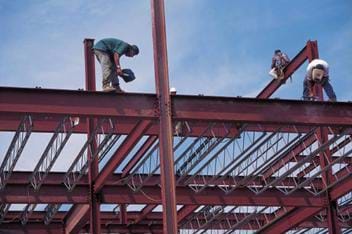
Has anyone e'er been in a skyscraper? Skyscrapers did not exist until about 90 years ago. Before at that place were skyscrapers, the tallest buildings could merely stand up about x stories high. This was considering the master cloth used in constructing structures was wood. Architects had plans and hopes for taller buildings, but the materials available at the time did non allow for buildings to agree the weight of buildings greater than nigh 10 stories alpine. Engineers began to develop steel beams that are much stronger than wood and could be used in the construction of buildings and bridges. Today, nosotros call these sturdy beams, I-beams (come across Figure one). The development of steel I-beams was precisely what architects needed in order to build taller buildings; as a result, skyscrapers began to shoot upward high into the sky.
Clearly, modern cities — with their amazing skylines — are the outcome of a articulation effort between engineers and architects. The top and beauty of buildings and other structure cannot be accomplished without the efforts of both types of engineering.
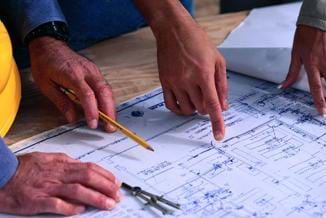
And then, we know that architects wanted to brand bigger, more elaborate buildings, and engineers helped them to effigy out how to brand it possible. It seems, then, that architects come with an idea and then make a program that engineers aid them execute. The builder'due south plan has a special name – it'due south called a blueprint (see Figure 2). Has anyone seen a blueprint? What is the purpose of a pattern? Later on the architect creates the blueprint (building program), the engineer goes over the architect'southward blueprint and decides what materials must be used to make bring the architect's design to completion and to brand the building strong plenty for apply.
Many types of engineers besides work on other systems within a building, such equally elevators, lighting, heating, ventilation, air-conditioning, plumbing and much more. It requires a lot of applied science teamwork to design, construct and finally gear up a building for daily use. From selecting appropriate piece of furniture to free energy efficient window coverings to sound proofing carpet, there are a lot of details that get into building design.
Lesson Background and Concepts for Teachers
An builder and engineer both participate in designing and building a construction, whether it is a house or a skyscraper. An architect designs and draws upwardly plans for buildings, bridges, and other structures. The goal of an architect's blueprint is to satisfy the customer's requirements, making the advent of the structure to the customer's liking and performing quality work. Students can practice applying these considerations and skills to design their own parking garage with the Requirements & Constraints: Making Model Parking Garages activity.
Civil, architectural and structural engineers accept the responsibleness of applying an architect'south pattern and carrying it through to construction. The goal of these engineers is to satisfy the customer'southward requirements and make the design functional and rubber. Other engineers that may exist involved in edifice design are electrical engineers for the lighting systems, mechanical engineers for the lift, and plumbing engineers for the plumbing system, amid others.
The key divergence between an architect and an engineer is that an architect focuses more on the artistry and design of the building, while the engineer focuses more on the technical and structural side. While the architect is concerned with making the building aesthetically pleasing, an engineer makes sure that the building is functional and safe. (There is, of grade, a lot of overlap, but these definitions should give students a general idea.) Architects design a structure past because the customer's needs and requirements. Engineers design the structure co-ordinate to the architect'due south design, including electrical drawings, structural layout and plumbing. To develop and present their designs, both architects and engineers utilise technical drawings called blueprints. A pattern is the detailed drawing presented by an architect or engineer that outlines their blueprint. Blueprints can be mitt-drawn or drawn on a computer using a computer aided cartoon program, such as AutoCAD® or SolidWorks®.
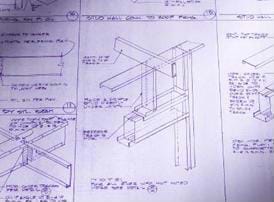
In designing whatever structure, an architect has to plan out their ideas by making a scaled cartoon (encounter Effigy iii). Before an engineer can approve an builder's design, they accept to analyze the design and select materials that tin can safely uphold the construction. An engineer takes the design presented by an architect and determines whether or not it is possible to build, and what are the all-time materials to use. Different materials have unlike advantages, such every bit greater force or greater flexibility. One advantage of wood, for example, is that information technology provides a lot of strength but can also be cut down to size with ease. Steel, however, is meliorate for alpine buildings because it is stronger than wood and can exist made into long beams. There are a lot of decisions that go into every minor detail of designing and building structures. In order to design rubber structures that will last for many decades, engineers must stay current on the properties of materials, know about design flaws and research new engineering engineering science.
Associated Activities
- Requirements & Constraints: Making Model Parking Garages - Students consider projection requirements and constraints as they design, build and test their own model parking garages. Teams draw blueprints, select construction materials, keep a budget and examination their structures to find their maximum loads.
Watch this activity on YouTube
Lesson Closure
It is getting shut to game time and your class decides to head into the stadium to grab your seats before the action starts! As you walk into Olympic stadium, yous are all the same thinking about what you just learned about architects and engineers. You know that in that location are lots of different sites for the different Olympic events: the soccer field, the gymnasium, the swimming facility, and many more. Some of these buildings look really neat and must accept taken a lot of work from both architects and engineers! Let'southward run into if you lot tin recollect the departure between the roles of an architect and an engineer. Who can tell me what architects do? (Reply: An builder focuses more on the artistry and blueprint of the edifice.) Great! And what practise engineers do? (Answer: The engineer focuses more than on the technical and structural side.) Tin someone requite an example of how engineers and architects take different responsibilities in designing a edifice? (Possible Answers: Architects determine where windows and lighting should exist, where doorways and stairs should be located, where congenital in bookshelves and counters should exist, etc. Engineers concern themselves with making buildings safe and functional by selecting structural materials, deciding where the structural members of the blueprint demand to go, and designing the electrical, heating, ventilation, air conditioning and plumbing systems.)
I accept one more question for you. Who remembers what very important thing had to happen before architects and engineers could build alpine skyscrapers? That'southward correct! Steel, which is stronger than forest, had to be invented. This is a great example of how an technology development allows architects to realize their vision of amazingly tall buildings.
Vocabulary/Definitions
Architect: A person whose profession is designing and drawing plans for buildings, bridges and houses, besides as many other structures.
Design: A detailed plan of a design, commonly to scale.
Computer-aided design: Design software used in architecture and applied science to create precision drawings; likewise known as CAD.
Engineer: A person who uses math and scientific discipline to design and create things for the benefit of humanity and our world.
Assessment
Pre-Lesson Assessment
Give-and-take Questions: Solicit, integrate, and summarize student responses.
Does anyone know what an engineer does? (Answer: An engineer is a person who designs and builds things for the benefit of society. Engineers utilise math and science to design and build structures, equipment and processes.) Who can explain what an builder does? (Answer: An architect is a person who develops the creative designs for buildings or structures.) Tin someone call up of when these two professions would work together? (Reply: in the pattern and structure of a skyscraper, an Olympic stadium or any structure) Besides civil engineers, what other types of engineers are involved in making a structure? (Answer: electrical engineers, state-development engineers, lighting engineers, mechanical engineers, etc.)
Post-Introduction Assessment
Olympic Blueprint: Equally a grade, choose one Olympic edifice or site, and so make a list of unlike tasks that are performed in designing that construction. Some of these tasks include:
- Figuring out the correct sizing of doorways, the number of bathrooms, where to put the light switches, which roofing material to utilise, etc. Try to figure out if these tasks are function of the architect or the engineer's drawing/pattern. (Answers: doorways – architect; bathrooms – architect; calorie-free switches – engineer; roofing material – engineer.)
Every bit students call out components, write the different parts in ii columns – one under "architects" and the other under "engineers." Ask the students to assistance you decide which column the dissimilar parts of the building should become under. Ask the students if they recall what had to exist adult in gild for tall, complicated buildings to be built. (Answer: steel) Remind the students that building a structure can be quite complicated, and so information technology is extremely important that architects and engineers practice good teamwork to meet the needs and desires of the customer.
Special Structures Discussion: Discuss as a course:
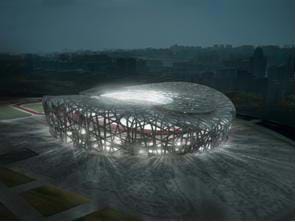
- What are some dissimilar structures that architects and engineers designed and built together? (Respond: Well-nigh any construction — including bridges, schools, homes and businesses — is the consequence of architects and engineers working together. If yous are doing this activeness every bit part of the Olympic Engineering Unit, use examples from the Beijing Olympics.)
Lesson Summary Cess
Drawing: Have the students draw their Olympic hotel and brand a "design" of their room. The design should include doorways and parts of the room, not furniture or accessories unless they are built into the hotel. Have the students label parts designed by an engineer (light switches, plumbing, etc.). You will probable need to depict an example blueprint on the board, and information technology would also be helpful to explain what is meant by "top view" of a room or building.
Lesson Extension Activities
Have students research a construction and effort to detect blueprints of the building. Alternatively, take students visit a library and cheque out a volume of edifice blueprints in which they are interested.
Accept students research skyscrapers and detect other engineering accomplishments that were crucial to the evolution of skyscrapers (i.e., elevators, figurer data monitors, telephones, etc.).
References
Beijing Municipal Commission of Urban Planning, "Presentation of Competation for the Architecture Pattern of National Stadium (2008 Olympic Main Stadium)," 2002. www.bjghw.gov.cn/web/static/catalogs/catalog_itl/itl.html Accessed Nov two, 2006
Bellis, Mary. Almost, Inc., Virtually.com, "The History of Skyscrapers," 2006. http://inventors.about.com/library/inventors/blskyscapers.htm Accessed November 2, 2006
Penn State, Department of Architectural Engineering, F.A.Q. for Prospective Students. world wide web.engr.psu.edu/ae/advising/prospective_faq.asp Accesed November 2, 2006
Rangaswamy, Aswin, P.East. Structural Engineers Association of Southern California, "FAQ," 2006. http://www.seaint.org/SEAOSC/public/faq.htm Accessed Nov 2, 2006
Wikimedia Foundation, Inc. Wikipedia, The Free Encyclopedia, "Architectural Applied science," October 31, 2006. www.wikipedia.org Accessed November 2, 2006
Wikimedia Foundation, Inc. Wikipedia, The Complimentary Encyclopedia, "Skyscraper," world wide web.wikipedia.org Accessed November ii, 2006
Wikimedia Foundation, Inc. Wikipedia, The Free Encyclopedia, "Pattern," www.wikipedia.org Accessed November 2, 2006
Copyright
© 2006 by Regents of the University of Colorado.Contributors
Sara Stemler; Melissa Straten; Katherine Beggs; Denali Lander; Abigail Watrous; Janet YowellSupporting Programme
Integrated Educational activity and Learning Program, Higher of Engineering, University of Colorado at BoulderAcknowledgements
The contents of this digital library curriculum were developed under a grant from the Fund for the Improvement of Postsecondary Education (FIPSE), U.South. Department of Teaching and National Science Foundation GK-12 grant no. 0338326. However, these contents do not necessarily stand for the policies of the Department of Education or National Science Foundation, and y'all should not presume endorsement past the federal government.
Last modified: May half-dozen, 2022
Source: https://www.teachengineering.org/lessons/view/cub_intro_lesson03#:~:text=An%20architect%20designs%20and%20draws,liking%20and%20performing%20quality%20work.
0 Response to "How Does Architect Relate to Draw Plans"
Post a Comment